PsychBytes

A publication of the Washington Baltimore Center for Psychoanalysis

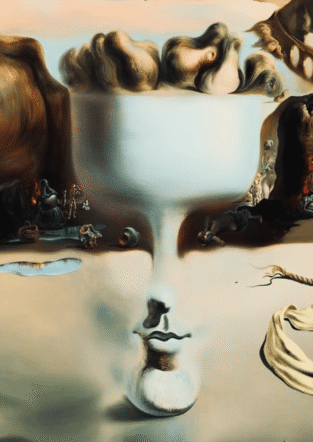
Nose and Lips of Akhenaten Metropolitan Museum of Art Purchase, Edward S. Harkness Gift 1926 www.metmuseum.org

Share This Post

Up Close and Personal – An Intimate Video Portrait

Robert R. Gerlits, MSW
Member, Washington Center for Psychoanalysis
December 2014 | Volume 1 | Issue 5

Biennially, the National Portrait Gallery fosters a competition where artists around the country submit intimate portrayals of a human being – sometimes themselves. In this video portrait, 2013 award winner Bo Gehring presents Esperanza Spalding (https://www.youtube.com/watch?v=6OeZxytSV3M)  In this intimate video, Gehring turns portraiture on its head by giving us a piecemeal portrait of Esperanza starting at her feet. Gehring presents her in parts giving each part equal time leaving us emotionally challenged. How do we relate to Esperanza where time and space is equal for her shoes, clothing, jewelry, hands, mouth, eyes, headwear? How do we mentally stack the equal slices of Esperanza into a human being?Paradoxically in Gehring’s video portrait, it is Esperanza’s choice of audio that endures throughout.  Her chosen music (“Tarde” by Wayne Shorter) serves as a proxy for her own voice and emotions.  And the warm musical tones preface the warmth we feel when we finally “meet” Esperanza and her broad smile.  It is her smile that reminds us that there is something special about the face, as we fix our gaze on the “real” Esperanza. Perhaps our gaze with Esperanza is unconsciously reminiscent of our infantile sharing of a gaze with our own mother – an emotional connection that is neither remembered nor forgotten.

Photo: Nose and Lips of Akhenaten

Metropolitan Museum of Art Purchase, Edward S. Harkness Gift 1926

www.metmuseum.org

Explore more in PsychBytes

On Leaving and Holding

One aspect of Joachim Trier’s 2026, Academy Award-nominated film, Sentimental Value, lingers: the idea that a house can hold memory, and in doing so, remind people of who they are and who they have been. The family home in the film becomes a kind of unconscious structure, a repository for grief, history, and the versions of themselves they could not keep.

I have never had that kind of house.

I have moved every two to four years for as long as I can remember. My life can be mapped through new cupboards and unfamiliar ceilings. I learned early how to fold myself into spaces never meant to hold me for long. Even now, some part of me is already preparing an exit.

WHY MAKE MIRROR ART IN WAR-TORN TEHRAN?

Why does Aref Montazeri, an Iranian sculptor whose art sells for over a million dollars, continue to make his towering works from shards of mirror glass in his studio in Tehran, amid window-shattering bomb blasts? He gently wraps his creations in shock-absorbing material, but why continue with such a fragile medium? In a Wall Street Journal article by Kelly Crow (May 2-3, 2026), he says, “Nothing, not even war, should prevent us from pursuing what we aim for.”

Content Edit Request

Content Edit Request

Please submit one request at a time.