

PsychBytes

A publication of the Washington Baltimore Center for Psychoanalysis

Share This Post

First Love*

Paula J. Hamm LPC
Member, Washington Center for Psychoanalysis
February 2015 | Volume 2 | Issue 2

Emotions matter. Pretending that emotions do not exist creates dissonant background music that, eventually, cannot be drowned out by pleasurable distractions.

Such was the case of the forlorn man who came to my office with a sensual dream. Entering the room he went to the couch and lay down. “I had a dream last night that I have to tell you about.”

Beatle music was playing on the stereo: “Would you believe in a love at first sight? Yes, I am certain that it happens all the time.” My hands embracing her face, we looked into each other’s eyes as if this were the last time together, or perhaps the first. Skin, breath and hair seemed to be crystallizing into the words, “I’ll never stop loving you” as I began pulling her mouth to mine.

“I woke before the kiss. Gazing out the window watching the gentle swaying of the trees in the wind, my mind drifted in and out of the dream. It felt so real leaving me breathless with my heart pounding. Tears filled my eyes blurring my vision of the trees through the open window.”

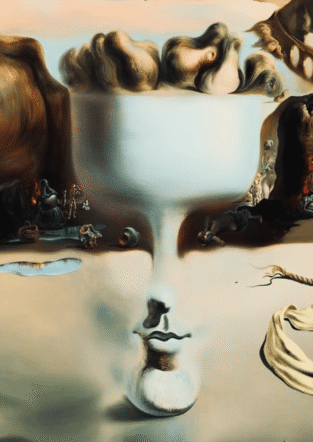
Dreaming evoked what had been unspoken. “I rejected a beautiful woman in my youth. Now I am haunted by her loving memory.” Following his emotional footprints together, we began to navigate through his youthful emotions with traces of yet an even earlier love, mother.

Explore more in PsychBytes

The Reality Principle

When I was in graduate school studying child development, a friend and I would go to a local playground and watch the adult caregivers and children. Inevitably, it would be time to go. Often enough, the child would want to stay: tough stuff! I imagine the following: the parent says, “We have to go so I can cook dinner before Mommy comes home.” And we all remember the child’s response, “But I don’t want to!”  Dialogue is met with screaming, yet the crying protests fail. Then the horror: The larger person would pick up the smaller and carry it away. The smaller, we remember, might feel like “an it”, a thing, not an autonomous person. Our will, the child’s will, was met with what Sigmund Freud called the reality principle. Many of us adults today are equally frustrated by the reality principle as we are carried off to places we do not want to go. The world is taking many of us down a road…

The Eloquence of Silent Dreams

Although psychoanalysis is based on “putting it into words,” most dreams, Freud’s “royal road to the unconscious,” lack spoken words. Researchers believe such dreams are silent because they tap pre-verbal experience, enabling them to achieve a profound ambiguity. The specificity of words can narrow that potential…

Content Edit Request

Content Edit Request

Please submit one request at a time.