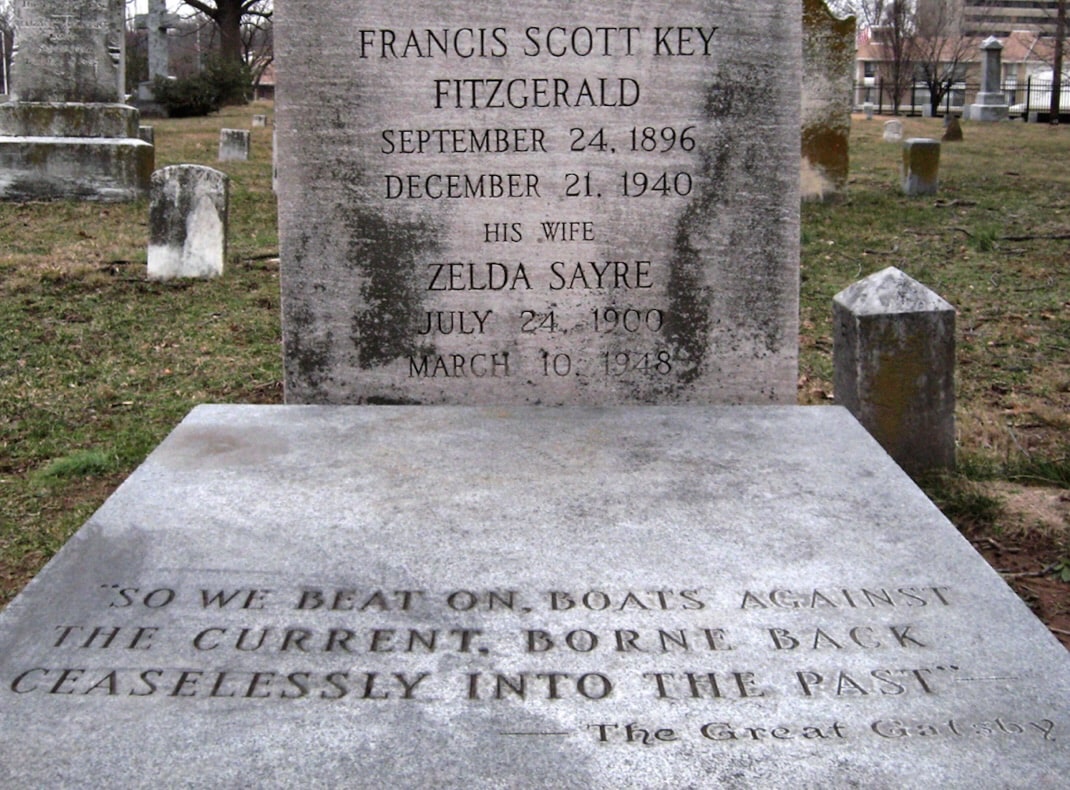
In a Rockville, Maryland, churchyard near the site of Chestnut Lodge, the great and now sadly defunct psychoanalytic hospital, F. Scott Fitzgerald and his wife, Zelda, lie buried. Inscribed on their shared tombstone is the final sentence of “The Great Gatsby,” which encapsulates the theme of his novel and evokes the challenge of analytic treatment: “So we beat on, boats against the current, borne back ceaselessly into the past.”
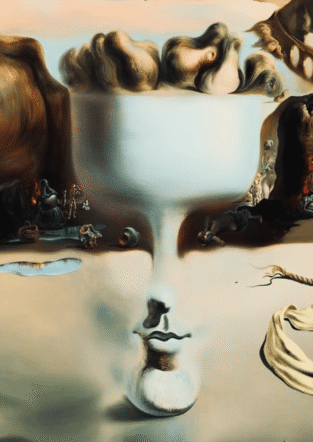
This image suggests the force pulling Gatsby back to his painful early life and his futile attempt to overcome its effects. His friend Nick recalls Gatsby describing his childhood as “hardscrabble.” There was no mention of a mother. But he seemed a blissful infant at his mother’s breast as he recalled first kissing Daisy: “she blossomed for him like a flower and the incarnation was complete.” Years later, Gatsby, now extravagantly wealthy, expects to snatch Daisy back from her rich and ruthless husband: “Can’t repeat the past?…Why of course you can.” His effort to supplant this “father” sets him up to be killed, his version of the Oedipal drama.
Gatsby had no one to help him recognize and avoid that drama. Mentors who molded his thoughts and behavior were criminals. Like the “boats” in his metaphor, unable to override the “current,” he was “borne back ceaselessly,” trying to undo his childhood trauma through Daisy, the “incarnation” of maternal love.
Fitzgerald, like Gatsby’s friend, Nick, was self-reflective, but like Gatsby, he was rejected by a socialite lover and sought relief in alcohol and glitz. Zelda, like Daisy, was a Southern belle, but she suffered from schizophrenia. He died of a heart attack at 44, and she at 47, in a sanitarium fire, locked in her room. If only the couple had settled in Rockville, where his family had deep roots; residing near Chestnut Lodge in life rather than as they do now, ironically, in death, they might have found health and even greater artistic success through treatment at the Lodge.