Many countries that have colonized indigenous populations have issued subsequent apologies for earlier atrocities. Since 1999, Denmark has issued three apologies to Greenland, the most recent in 2025, when, in an emotional speech, Prime Minister, Mette Frederiksen apologized to the Inuit population for the 1960s forced contraception of thousands of indigenous girls, many as young as 12, denying them the right to decide to have children or not.
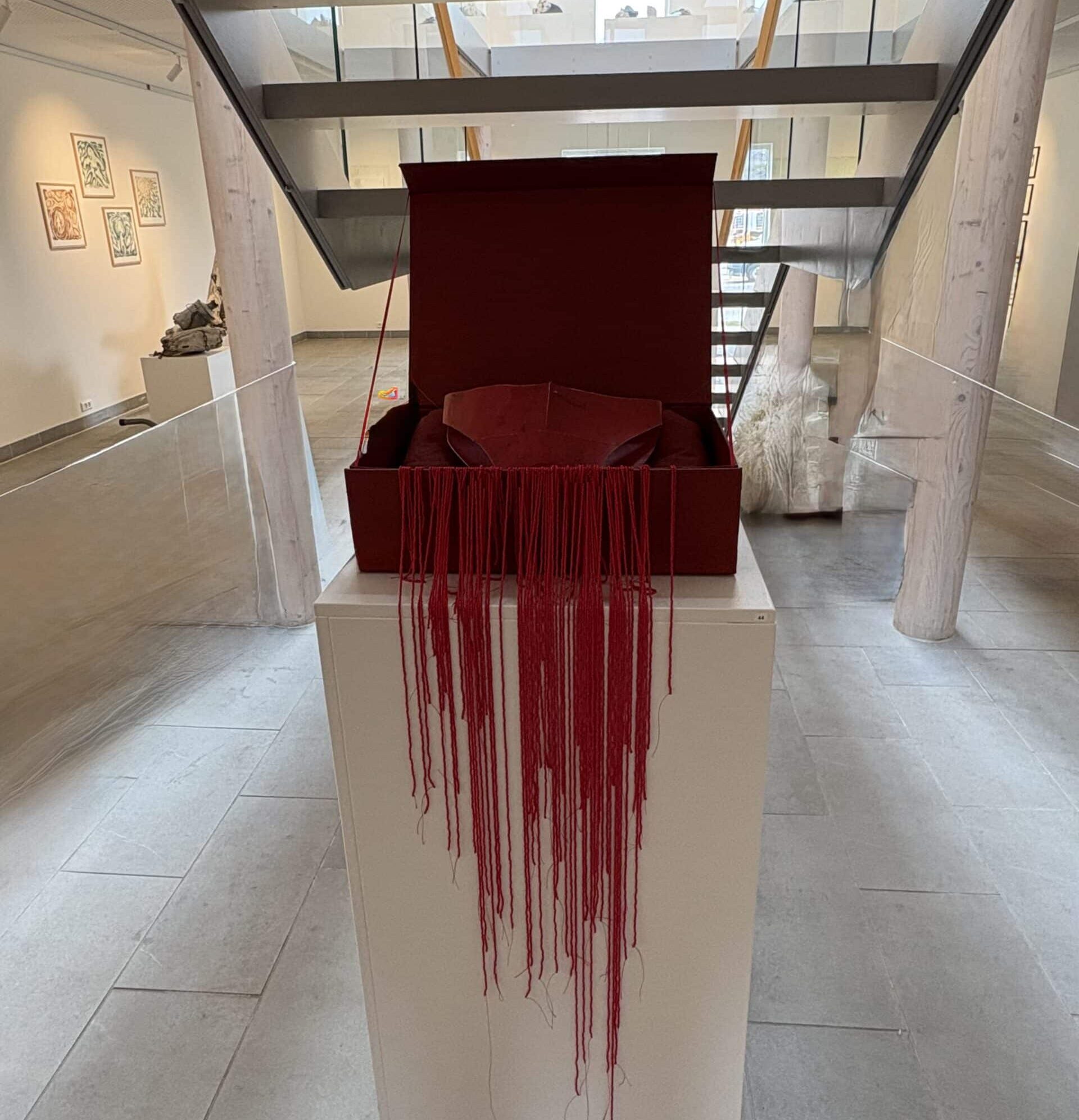
Knowing nothing of this history, I visited Nuuk last fall, visited the Fine Arts Museum, and stood before a sculpture titled “Inunngorsimanngitsut.” Not knowing what I was looking at, my body understood, as if I had been kicked in the solar plexus. Tears sprang to my eyes; I began to sob. The curator walked over to me and explained: the suitcase, representing the Danish government and the female reproductive organs inside it are made of dyed sealskin. The 43,000 beads dripping down the pedestal represent the estimated unborn Inuit babies. The English translation of the sculpture is “The Unborn.”
My visceral reaction told me that I was looking at a symbol of something very bad that had happened. It was the hue, the dark, muddy red of venous blood as opposed to the bright red blood of a paper cut or a cheery red Valentine. The venous blood color is associated with fear, danger, mourning, sadness, and the grotesque.
Christopher Bollas wrote about the “unthought known” and aesthetic experience and how art acts as a mirror, enabling one to feel a deep, existential sense of familiarity, “knowing” something in one’s bones, even if one cannot articulate what it is. As psychoanalysts and psychotherapists, we know that for “talk” therapy to promote change, cognitive understanding must be accompanied by an emotional resonance.
The Reality Principle
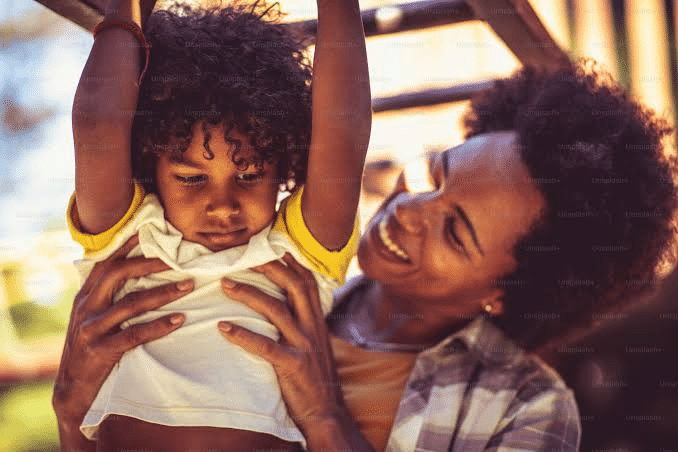
When I was in graduate school studying child development, a friend and I would go to a local playground and watch the adult caregivers and children. Inevitably, it would be time to go. Often enough, the child would want to stay: tough stuff! I imagine the following: the parent says, “We have to go so I can cook dinner before Mommy comes home.” And we all remember the child’s response, “But I don’t want to!” Dialogue is met with screaming, yet the crying protests fail. Then the horror: The larger person would pick up the smaller and carry it away. The smaller, we remember, might feel like “an it”, a thing, not an autonomous person. Our will, the child’s will, was met with what Sigmund Freud called the reality principle. Many of us adults today are equally frustrated by the reality principle as we are carried off to places we do not want to go. The world is taking many of us down a road…