PsychBytes

A publication of the Washington Baltimore Center for Psychoanalysis

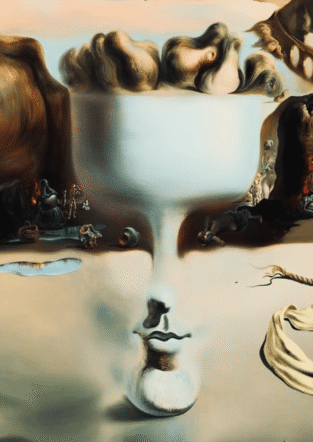
Photograph published by permission of vecteezy.com

Share This Post

Closings

Robin R. Mustain, MSW, Retired
Member, Washington Baltimore Center for Psychoanalysis
March 2026 | Volume 9 | Issue 8

At a funeral, I read Tennyson’s poem, “Crossing the Bar,” written when he was 80. He requested this poem be printed at the end of future publications of his work. He was closing his life’s work knowing he soon would be “crossing the bar.”

Later, I watched the documentary, “in restless dreams” , about Paul Simon, 84.  He dreamed of Seven Psalms and wrote to bring them to life. When he got to the seventh, he found he had no more lyrics! He explained this problem to a friend playing as much as he had completed. His friend said “…when I hear this, I really don’t want to die!”

These words inspired Simon’s lyrics for his last song: “Wait”.

“… Wait, I am not ready, I’m packing my gear. Wait, My hand is steady, My mind is clear… ” He was closing his life’s work realizing he soon would be “going home.”

These stories made me think about how we, psychotherapists and psychoanalysts, close our life’s work.  We may not be facing the end of our lives but sometimes we must close our practices.

So, how do we close?  Our audiences are so small…Our work so ephemeral…Transitional ferrying from moment to moment…Joining together…Nudging apart.

When we reach our career’s end, we are more like Simon than Tennyson: Wait! I can’t leave these therapies dangling… I am still skilled, still interested…Wait, I just need more time…

Neither man talks of pain in reaching the end. Tennyson asks for “no sadness of farewell’. After asking for more, Simon accepts “it’s time to come home.”

But closing a practice is painful for us and for our patients.

We must face each one stating that we will not be going forward with them.  Briefly, we grieve together. Then our clients move on, and we, we remain.

Explore more in PsychBytes

The Eloquence of Silent Dreams

Although psychoanalysis is based on “putting it into words,” most dreams, Freud’s “royal road to the unconscious,” lack spoken words. Researchers believe such dreams are silent because they tap pre-verbal experience, enabling them to achieve a profound ambiguity. The specificity of words can narrow that potential.
I have never had that kind of house.

I have moved every two to four years for as long as I can remember. My life can be mapped through new cupboards and unfamiliar ceilings. I learned early how to fold myself into spaces never meant to hold me for long. Even now, some part of me is already preparing an exit.

On Leaving and Holding

One aspect of Joachim Trier’s 2026, Academy Award-nominated film, Sentimental Value, lingers: the idea that a house can hold memory, and in doing so, remind people of who they are and who they have been. The family home in the film becomes a kind of unconscious structure, a repository for grief, history, and the versions of themselves they could not keep.

I have never had that kind of house.

I have moved every two to four years for as long as I can remember. My life can be mapped through new cupboards and unfamiliar ceilings. I learned early how to fold myself into spaces never meant to hold me for long. Even now, some part of me is already preparing an exit.

Content Edit Request

Content Edit Request

Please submit one request at a time.