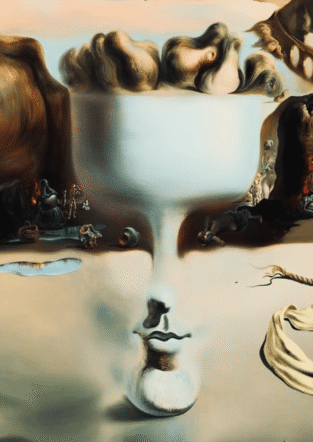
My dear friend has dementia. She cannot form short-term memories any longer and she becomes anxious when she knows she needs to keep track of something. She is aware her mind is going. “I feel confused all the time,” she tells me with deep shame. She had taken great pride in her sharp intellect all her life and now feels humiliated that she cannot remember what she is supposed to bring for dinner. It is heart wrenching to see her trying to cover up her lapses with as much dignity as possible. At the same time that her mind is losing its grip on the present, she is flooded with memories of her colorful and happy childhood. She takes great pleasure in telling stories about her adoring grandfather, the ethnic neighborhood where she grew up, the success of her immigrant father. Despite telling the same stories over and over again,
the telling is new for her each time and each time her excitement and delight in the story is the same.
It is striking, though, that my friend’s mind, despite having memories of eighty- five years of a very full life, returns to her early childhood without fail. She rarely talks about her years as a beautiful and cherished bride or the birth of her children. Her early childhood is what remains firmly anchored in her mind. No one knows how accurate the memories are, of course, but they hold her together in her fear of the present and the future.
If one ever needed a concrete reminder that our childhood forms the foundation, solid or shaky, on which our minds are built, one would only need to spend a little time with my friend to see, demonstrated again and again, that the most enduring experiences of our lives are there, in our first years.
Photo by Robbert van der Steeg