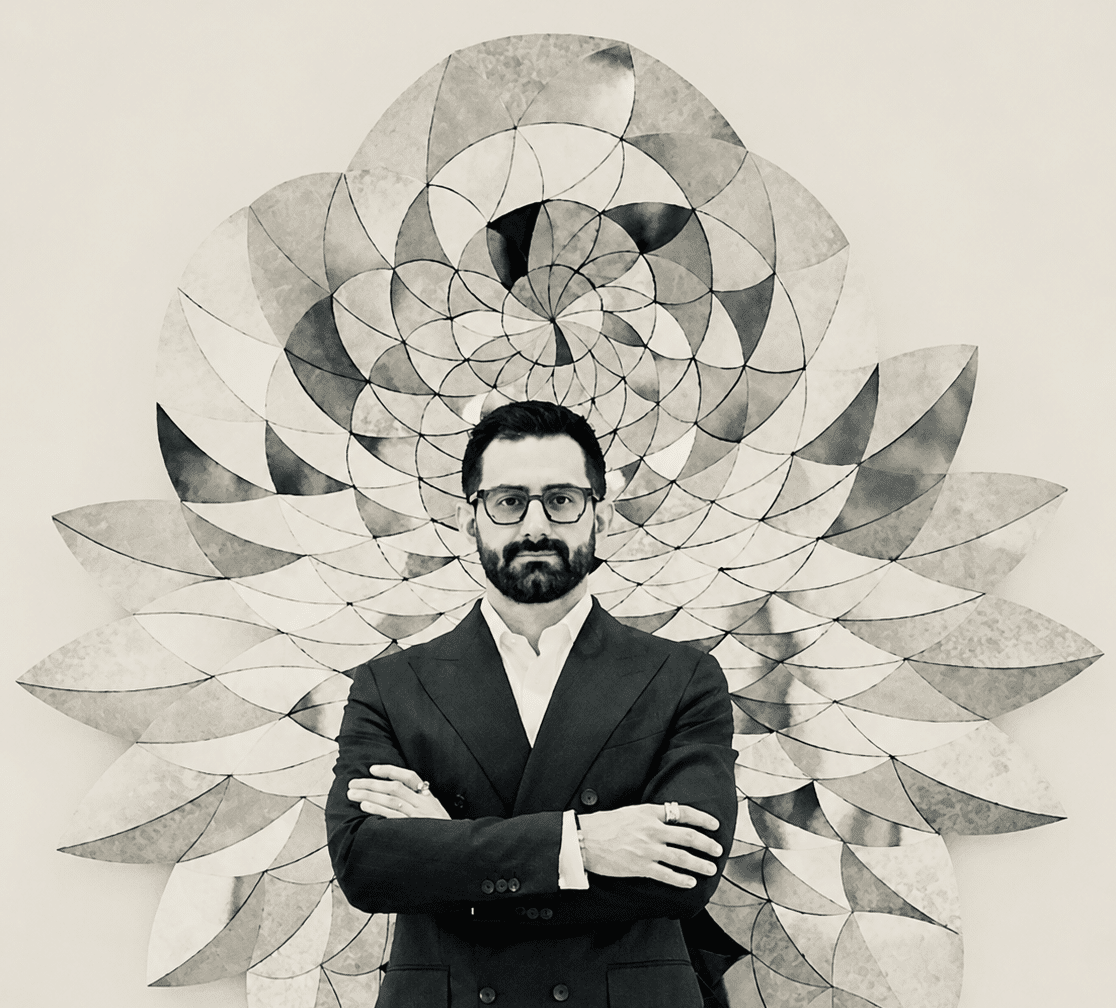
Why does Aref Montazeri, an Iranian sculptor whose art sells for over a million dollars, continue to make his towering works from shards of mirror glass in his studio in Tehran, amid window-shattering bomb blasts? He gently wraps his creations in shock-absorbing material, but why continue with such a fragile medium? In a Wall Street Journal article by Kelly Crow (May 2-3, 2026), he says, “Nothing, not even war, should prevent us from pursuing what we aim for.”
A fuller explanation emerges in the WSJ account of how this 39-year-old sculptor adopted the mirror as his medium. When he was just fifteen, he came home from school to find his parents gone. They had divorced and split their belongings, leaving an empty apartment: “The only item that remained completely intact was my mother’s vanity with its mirror.” His father stayed in touch, but his mother stayed away for years. He says that he “grieved by sitting in front of his mother’s vanity, imagining she was sitting behind the mirror asking him everyday questions about homework or chores.” He became fascinated by the effects of tilting the trifold mirror in various ways and “felt richer, surrounded by multiplied, phantom additions.” Montazeri says, “People inevitably lose valuable things, but they can learn how to replace them with something that adds meaning.”
Montazeri’s story, and his use of mirror shards as his medium, even in war-torn Tehran, sheds light on his creativity. Reminiscent of his mother’s vanity, his mirror art restores his empathic connection with her. It also exemplifies how artists, like Montazeri, who feel they “must” create, are driven to find a figurative “mirror” through art that symbolically reflects their inner life. It is how they satisfy their longing, which continues from infancy, for the mirroring of an empathic, responsive mother.