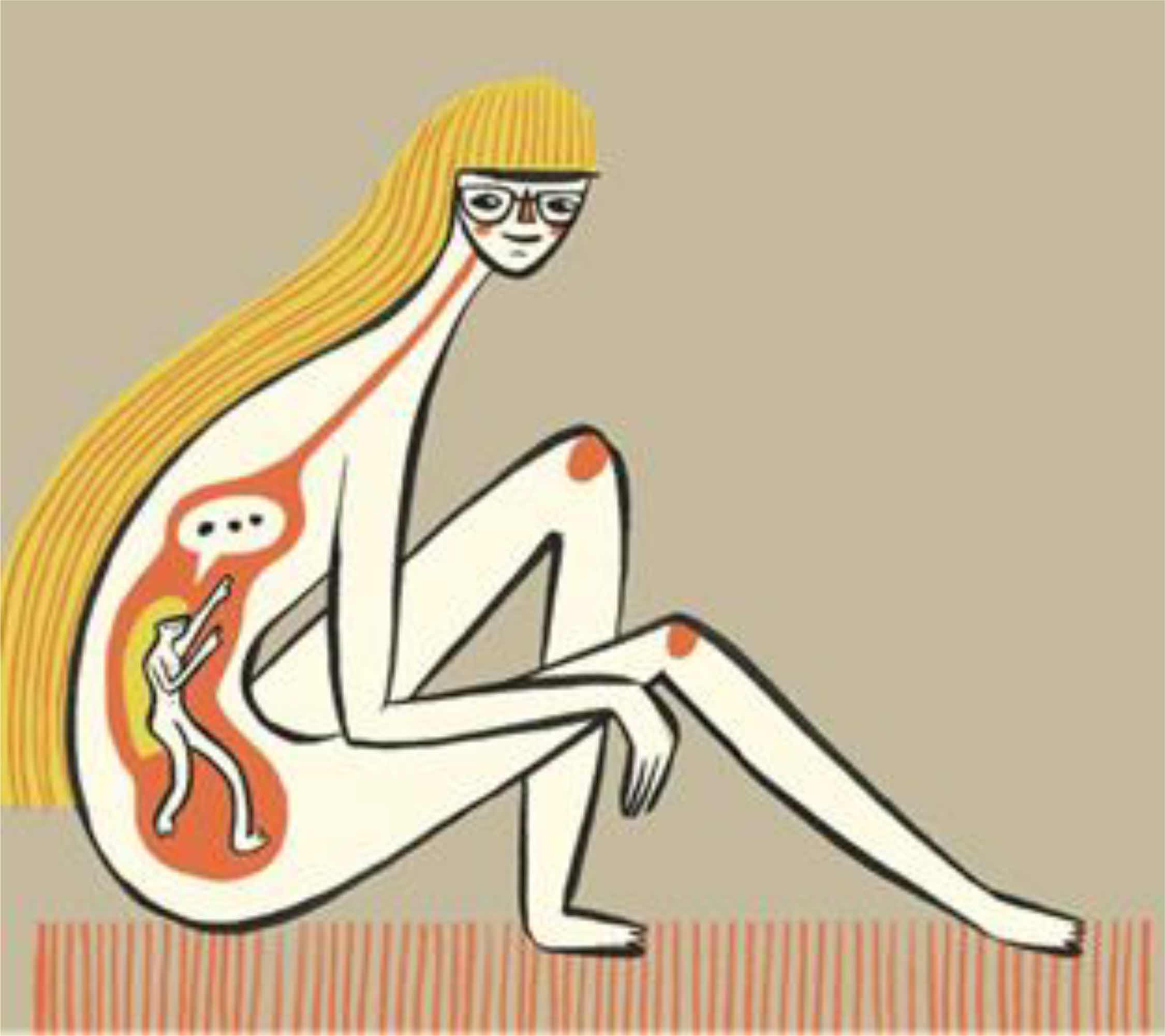
The body is part of the mind. There’s more than a mind-body connection. “I feel so heavy and weighed down by my losses.” “I’m so happy I feel like I could walk on water.” “Thinking about what happened makes me want to hide my face believing I’m worthless.” The felt sensing in our body isn’t called a “feeling” by accident. Over time, healthy parents recognize our emotion-laden faces and teach us the names for corresponding bodily experiences: sad, joyous, ashamed, respectively. In speaking our feelings out loud we come alive and build relationships with others. The neuroscience behind emotion tells how our brains collate and make coherent the emotional meaning of sensations, movements, images, smells, sounds, etc., via the limbic system and right brain. Our gut is an emotional barometer and connects to the limbic system via the Xth cranial nerve, the Vagus.
Our feelings can also become detached from their story. “For weeks I’ve been walking around in a crummy mood. I’m angry and bitter. I can’t shake it. I’ve been snapping at people. I can feel them steering clear of me. I’m disgusted with my behavior and ashamed of myself. I just wish I knew what was bothering me.” Veterans of war and victims of domestic violence sometimes know they ought to be feeling, but, instead, feel nothing, they’ve become numb.
While emotion can be understood through the lens of neuroscience, new psychoanalytic methods that deeply incorporate this knowledge still appreciate that the most important factor in psychological therapy is the relationship between patient and therapist. In a safe enough relationship detached feelings emerge and rejoin their narratives. It can be a daunting process, and it’s also true that growing a mind into full bloom is a gift for all of us.