Warrior two is a strong, balanced, yet flexible pose–a neutral stance, grounded to reality, allowing for grace.
I first need to root down but not be locked in. I must be able to straighten and bend. By imagining that I am pulling my feet toward each other, I enter the isometric, generating force while remaining still. Ideally, I become immovable in the face of distractions. With my arms I reach in both directions and encompass. I face forward but bend backward to be greeted by a heart-opening surprise.
Although by now I have done this pose hundreds of times, I always need to make some adjustment. Sometimes I am shaky. Sometimes I need to remind myself where I am in space. Almost always I need to relax and let go of unnecessary and unhelpful tension.
From warrior two, I can move into exalted warrior and orient toward the heavens or bow and assume humble warrior. I can pivot to warrior one and then into high and low lunges, possibly setting myself up to sprint if I wish to or need to. I can aspire to the graceful balance of warrior three.
I need to remind myself to breathe through it all.
After intensive experiences as a patient and parent of a patient, I have come to the realization that I can most impact the practice of medicine by the way I practice medicine day to day. By now, I have seen the ripple effects of my work with individuals; ultimately, it affects their families, their work, their communities, and their leadership.It can impact the trajectories of individual, family, and cultural histories. Flailing around wastes energy. Maintaining focus, rootedness in reality, and neutrality can lead to awareness, empathy, and–dare we hope–greater freedom to work and to love.
So Near and Yet So Far
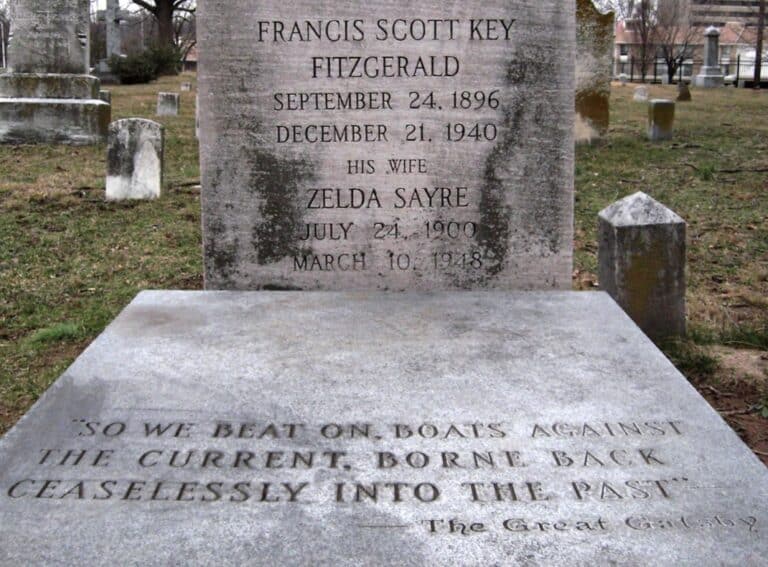
In a Rockville, Maryland, churchyard near the site of Chestnut Lodge, the defunct psychoanalytic mecca, F. Scott Fitzgerald and his wife, Zelda, lie buried. Inscribed on their shared tombstone is the final sentence of “The Great Gatsby,” which encapsulates the theme of his novel and evokes the challenge of analytic treatment: “So we beat on, boats against the current, borne back ceaselessly into the past.”