“Oh boy! It’s Thursday evening and I’m exhausted. And here I am to dump it all on you. How do you manage I wonder, with people dumping on you all day?” Many patients wonder how therapists can receive and contain the grievances that they need to voice in treatment without retaliation or resentment.
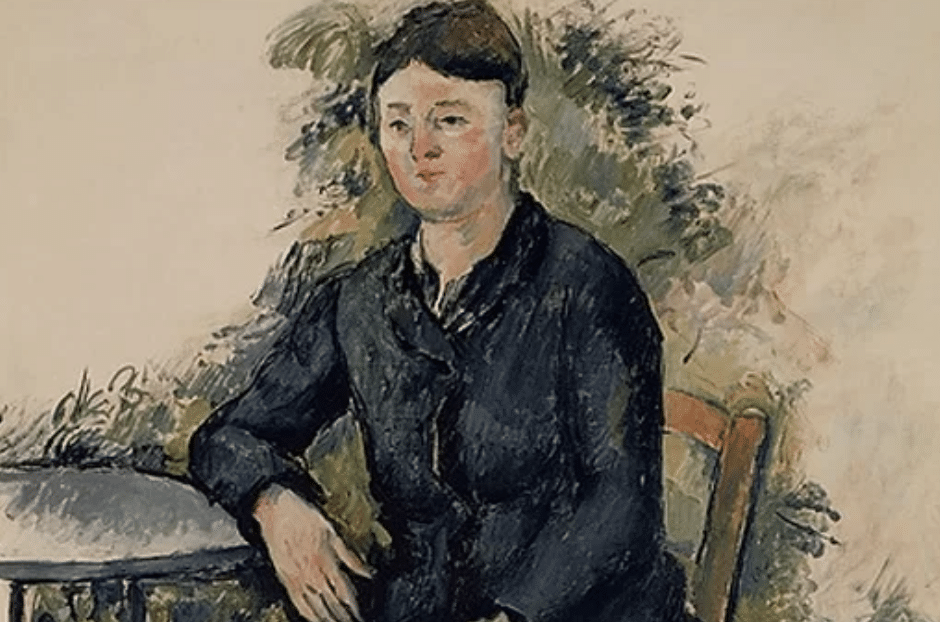
As I reflected on her question, I thought of the montage in my line of sight when working – an unfinished print of Cezanne’s wife seated at a table in her garden, and a framed postcard depicting an Ancient Egyptian cat goddess, Bastet. Both look at me. Madame Cezanne is implacable and appraises me with solemnity, curiosity, and poise. The painting reminds me of the patient listening required over an ongoing period of time, and of the unfinished nature of our work. Bastet, the protector goddess sits solemnly with fortitude. She is playful, affectionate and fierce when need be. At times, I need to be visually called back by the prints to these qualities in myself.
Most therapists have some type of touchstone in their offices, linking them to stabilizing resources they carry inside. Freud had his artifacts from antiquity, some have dogs physically present or nearby. Therapists aim to create a safe, private and welcoming space for their patients, both through the colors and textures of their furnishings and walls, as well as the particular art and objects that they place on walls, shelves and tables. This external ambiance fosters a needed security for the inner work that the patient has come to do.
Likewise, therapists too need a safe, private and welcoming environment and touchstones that support us in the face of the many challenges of the work. These very concrete objects in our office can foster the sense of a secure tether that all of us, therapists and patients alike, need when we feel the dump of everyday life.