On a recent trip to Germany, I was very interested to see their modern art, to see what sense the people are making of who they are. Contemporary psychoanalytic thinking holds that some facts of human existence cannot be said but rather shown, as expressed in the arts.
I learned that it was not until the 1970s that German students were taught about their country’s role in World War II. Before then, history classes stopped before the war started. During this period of “not-knowing,” there was a movement for Concrete Art which intentionally avoided any relation to the real world. Viewing these paintings felt cold, aloof. In Wurzburg’s Kulturspeicher Museum, I felt the art seemed to be grappling with the past. There was a gray painting with cross lines that made me think of a target for a plane dropping a bomb. There was a yellow, red, black and white painting rearranging the colors of the German flag into distinct areas, the fertile fields and then the war and blood.
The cathedral in Wurzburg was filled with modern art, not typical in Catholic churches. In two paintings, one was almost all black; another was gold with a tear out of the corner, dripping black and red – either the crucifixion or the holocaust.
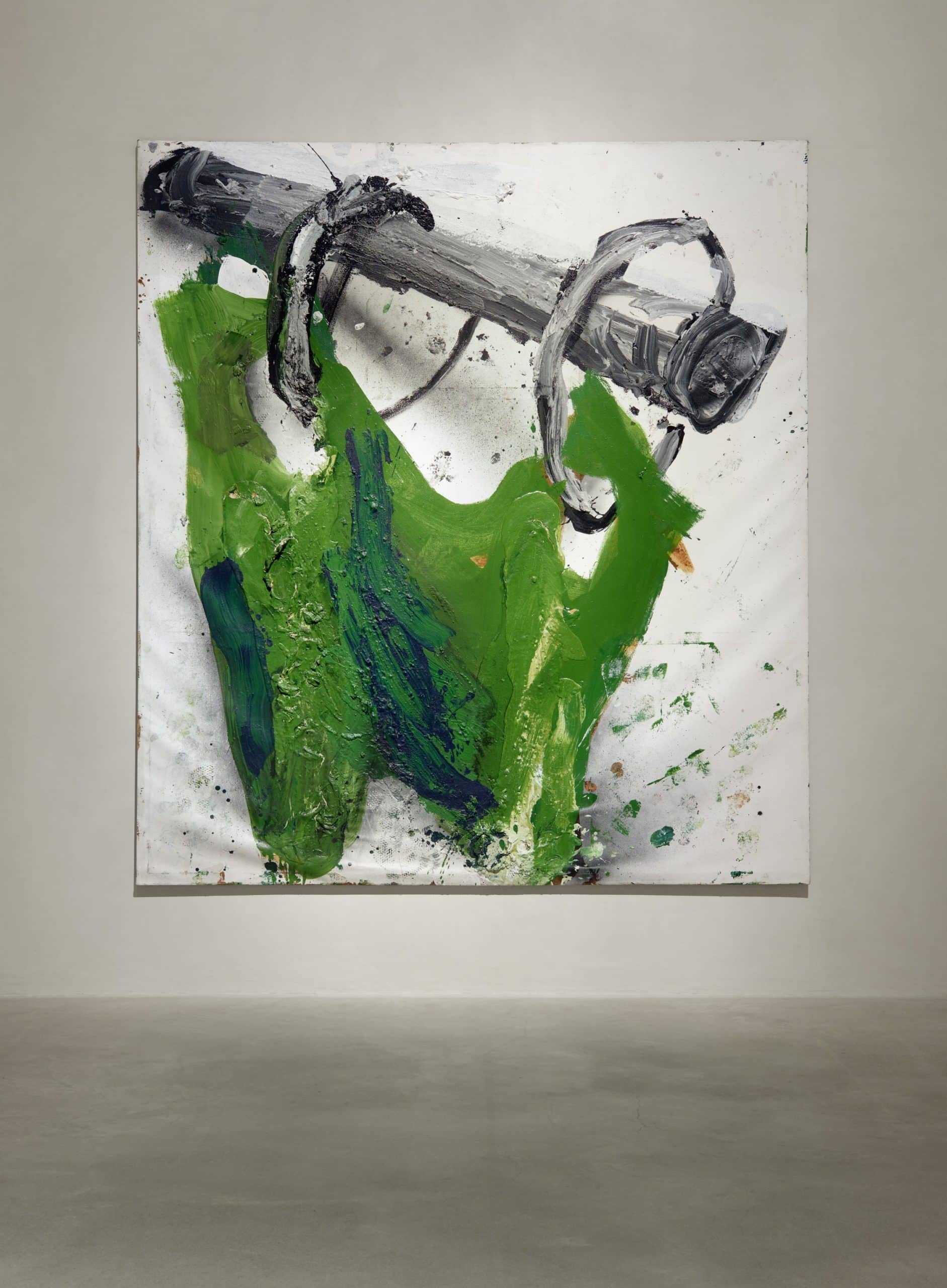
In a church in Cologne, on top of Roman ruins uncovered by bombs, stood a modern stone sculpture that held the tabernacle. Behind was a modern museum with an exhibit on Jews in Germany. There were ancient Torah and leather prayer books. All the art was by Jewish artists, most paintings dominated by shades of black and gray. One painting showed a beautiful patch of green that was shackled in handcuffs. Looking at these felt like a punch in the gut, causing me to wonder if this art by Germans is making sense of their history: what they did, what happened to them, who they are now.