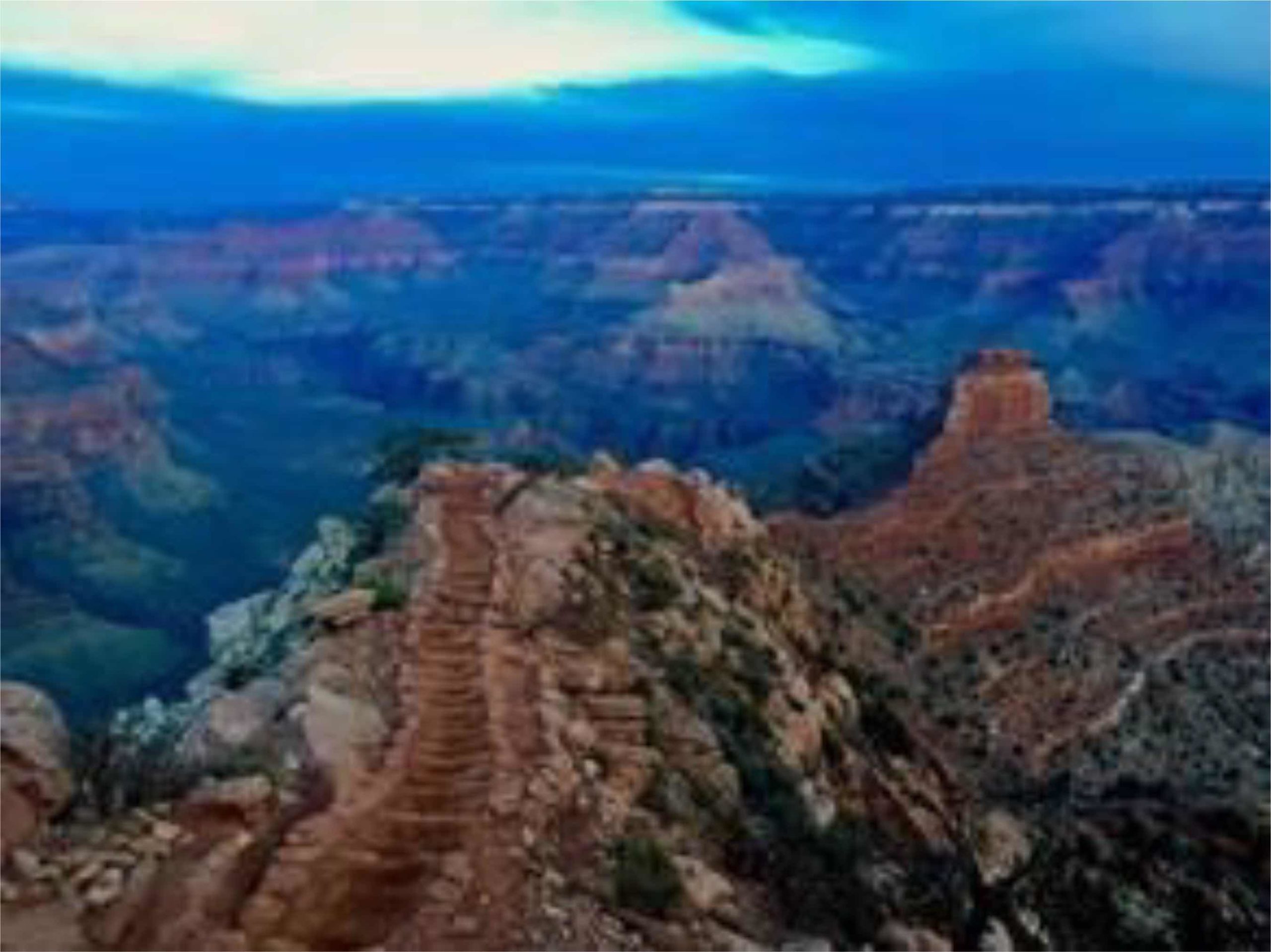
My husband and I set out on a chilly February morning to hike down the Grand Canyon. Ice was forming on the shadowed walls. I was overwhelmed by the vastness of the canyon lying before us and felt dizzily swallowed by the magnificent landscape. To avoid feeling consumed by the enormity of the canyon, I focused on the trail immediately before me.
After walking for an hour, we came to a ledge about three feet across and thirty feet long with precipitous thousand foot drops on each side. I stood frozen. My husband walked across this tiny ledge with ease. He turned around calling, “Come on. It’s easy.” I was trembling. I could not walk across. My heart pounding, I lay on my belly. Losing myself in my aim, my arms pulled and my feet pushed. I was relieved to reach the other side, disappointing neither myself, nor my husband.
We continued the hike down. Although we did not reach the bottom since we had to turn back before sunset, we were pleased with our progress. Both of us were joyful, tired and amazed at the immensity of the canyon. As I was chatting away and finding pleasure in the uphill climb, my husband turned around saying, “Look behind you.” I had just walked over what six hours earlier I had crawled across on my belly.
Now, in my analysis, my analyst and I reflect on the abysses in my mind and they recede. Nothing changes except my perspective, and with it, myself, one precipice at a time. The metaphor of my experience in the canyon frequently comes to mind as I tempt my fate in these other crossings.
Member, The Washington Baltimore Center for Psychoanalysis