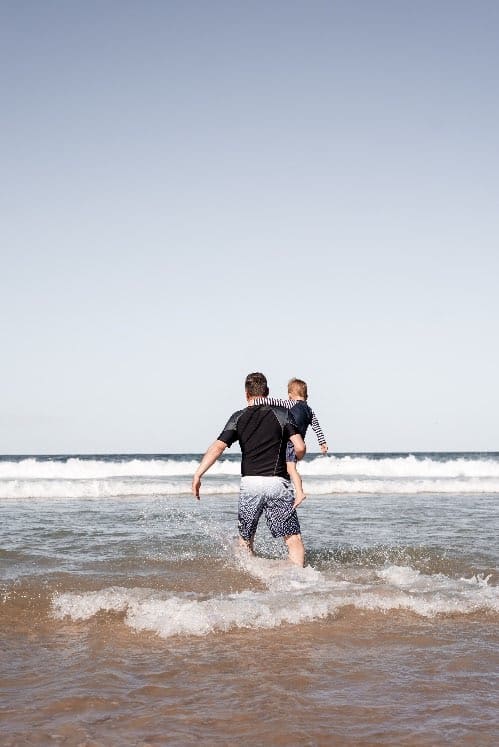
It was early April, and the country was in lockdown but my 13-year-old son, who described himself as my “emotional support human,” and I were driving across an empty landscape to Charleston from Baltimore. My Father was dying.
A hospice nurse called the night before. It was time. Dad had never quite recovered from a recent surgery. The choice was to send him to hospital or I could drive down and be by his side. My sister found a flight from New York; I hit the road with my son. As we approached Richmond, I felt a need to show Connor where I had attended college. It was on the way, right? I knew that this was partly a delay tactic, but also to affirm that I had a different kind of relationship with my son than my depressed, withdrawn Father had with me. A man who loved me and delighted in my calls, but could only find it in himself to call me once in his life. As I was losing my Father, I wanted to be sure my son was close. “Look, that’s my first apartment! I saw a concert there. That was the science building.”
My sister and I were issued face shields and were left alone with dad in a private room. We didn’t want to touch anything, even each other or Dad, a cruel manifestation of the distance that had always existed between us. He had a fever of 104, was suffering and on morphine. Did he have Covid-19?
We played him songs. Talked to him. To each other. Felt blessed to do a few of the things family do for the dying at a time when so many were surrounded by masked strangers. Then, he died. I was surprised how quickly he turned from my Father into a dead body. My sister and I dared a hug, our exhausted tears dripping onto each other’s shoulders. Mere hours later my son and I drove North. We sang songs. Listened to comedy programs. There would be no funeral. No memorial service. No remembrance. My Mother, in memory care, would not be told. It felt like the whole world was conspiring to keep us from thinking and grieving and remembering. The world may have stopped for 2 months in the Spring of 2020, but my Father died. That couldn’t wait.