
Tina Adkins was a research assistant professor with the Texas Institute for Child & Family Wellbeing and the director of the Sue Fairbanks Psychoanalytic Academy. Adkins has worked her entire career in the field of child welfare. She began as a child protective services worker and went on to become a counselor and then specialize in attachment and child development. She went to London to learn about cutting-edge, child-welfare interventions and obtained two of her degrees from University College London and the Anna Freud Center. For her dissertation, she worked with Central Texas foster parents to create a practical, promising intervention for foster and adoptive parents called “Family Minds.” She has an MA in Counseling from Texas State University, an MS in Developmental Psychoanalytic Psychology and a Ph.D. in Psychoanalytic Studies from University College London (UCL). Dr. Atkins is currently in private practice in Sterling, VA and continues her research coding Reflective Functioning in Parents using The Five-Minute Speech Sample Procedure.
Monisha Nayar-Akhtar obtained her Masters and Ph.D. in clinical psychology from Wayne State University in Detroit, Michigan. Later, she trained at the Michigan Psychoanalytic Institute in adult and child/adolescent analysis. After practicing for over twenty years in Southfield, Michigan, she relocated to suburban Philadelphia. Currently, she is affiliated with the Psychoanalytic Center of Philadelphia where she is a Training and Supervising Analyst. She is an active member of the American Psychoanalytic Association where she served as a member of the Program committee until 2020 and as chair of the Clinical Workshop on Child and Adolescent Psychoanalysis until 2018. Dr. Akhtar has a keen interest in Applied Psychoanalysis and in promoting psychoanalytic thinking in India, her country of origin. In 2011, she began working with Udayan, an orphanage based in New Delhi and continues to do so to date. Her current projects include providing ongoing clinical training workshops in trauma and attachment to psychotherapists, social workers and others, working with children and adolescents. In 2018, she established the Indian American Psychoanalytic Alliance in Philadelphia, a non-profit organization that provided a two-year distance learning program in psychodynamic psychotherapy. Her current project includes training therapists in early intervention and establishing a Therapeutic Play Center to provide therapies for disturbed children between the ages of 2 and 6. She has edited two books. One titled, Play and Playfulness, and the other titled, Identities in Transition. Dr. Akhtar is the editor-in-chief of a journal “Institutionalised Children: Explorations and Beyond,” which she, as its editor in chief, helped launch in May 2014. This peer reviewed journal published by Sage Publications, presents papers from the SAARC region on issues pertinent to children and adolescents who are orphaned or in need of care and protection. She is on the editorial board of the Psychoanalytic Study of the Child and Adolescent as well. She is a recipient of the Ticho Award and presented a paper titled ‘Psychic Space, Structural Space, Cyber space, Desire and Intimacy in a Digital World,’ in Chicago, 2016, during the spring meetings of the American Psychoanalytic Association. Dr. Akhtar is in private practice and has an office in Center City, Pennsylvania.
Sharon Alperovitz is in private practice in Washington, D.C. She is a Teaching Psychoanalyst and a faculty member of the Psychoanalytic Studies Program and the Observational Studies Program at the Washington Baltimore Center for Psychoanalysis. She was active for many years, co-leading Work Discussion groups at Jubilee JumpStart Daycare Center in Adams Morgan, Washington, D.C.
Dr. Shaneen Alvarez has over 25 years of clinical social work experience advocating for children and families at social service agencies in the Maryland-District of Columbia-Virginia area, such as St. Ann’s Center in Hyattsville, Maryland, Child & Family Services Agency (CFSA) in Washington, DC, and Phillips Programs in Annandale, Virginia. Dr. Alvarez received her D.S.W from Barry University where she focused on preventing housing instability among former foster youth. She received her M.S.W. from the University of Connecticut School of Social Work and her B.S.W. from Central Connecticut State University. Currently, she is a clinical director for a behavioral health agency and sits on the National Association of Social Workers- Virginia’s (NASW-VA) advisory board as president. She is licensed in Maryland, Washington, DC and Virginia.
Lani Chow is a core faculty member of the PsyD department at the California Institute of Integral Studies. She was the Chair of the PsyD department (2017-2020) and the Director of Clinical Training for the Psychology Doctoral Program 2014-2018. She was the Director of the Psychological Services Center from 2008-2020. She maintains a clinical practice in addition to supervising/consulting at a number of community mental health agencies in the Bay Area, including West Coast Clinic, Homeless Youth Advocates, and Rafiki Coalition for Health and Wellness. She has been a member of the Community Psychoanalysis Track and Consortium, committee member since 2016.
Elizabeth Hersh is a psychiatrist in Washington, DC. She is a training analyst at the WPCP and a faculty member of the Observational Studies Program at the Washington Baltimore Center for Psychoanalysis. She has also been active for many years, co-leading Work Discussion groups at Jubilee JumpStart Daycare Center in Adams Morgan, Washington, D.C.
Joel Kanter is in private practice of psychotherapy and clinical case management in Silver Spring, Maryland. Recognized as a Distinguished Practitioner by the National Academy of Practice in Social Work, he is an Instructor in Psychiatry at the George Washington University School of Medicine and is a Consulting Editor of the Clinical Social Work Journal. He serves on the Board of the American Association for Psychoanalysis in Clinical Social Work. He has published over 40 articles and book chapters—many on community care of persons with severe mental illness–in diverse social work, psychoanalytic and psychiatric journals. His major publications include Coping Strategies for Relatives of the Mentally Ill (NAMI, 1984), Clinical Studies in Case Management (Jossey-Bass, 1995), and Face to Face with Children: The Life and Work of Clare Winnicott (Karnac, 2004).
Katherine Knowlton is a Seattle psychologist retired from several decades of private practice in individual psychoanalytically oriented psychotherapy. Since 1995 she has maintained an affiliation with the University of Washington, where she leads Balint groups for Family Medicine, Psychiatry and Behavioral Sciences and specialized surgical teams for Seattle Children’s Hospital. Her Balint work also includes holding private groups for mental health providers and training leaders nationally with the American Balint Society.
Caitlin Lee is a Licensed Independent Clinical Social Worker (LICSW) with nearly a decade of experience specializing in forensic social work, community mental health, immigrant and refugee mental health, substance use disorders, and medical social work. She earned her Master of Science in Social Work (MSSW) from the University of Louisville and is licensed in Washington, DC and Virginia. She currently works as an Associate Program Director for a local behavioral health clinic. Outside of this role, she conducts mental health evaluations for immigration cases to include VAWA (Violence Against Women Act), U & T visas (Victims of Trafficking and Violence Protection Act), and asylum cases. She has extensive experience conducting diagnostic assessments using standardized psychological screening tools and has worked with diverse populations, including refugees, trauma survivors, survivors of torture, and immigrants. Her clinical interests focus on the intersections of gender, race, behavioral health, and cultural trauma, with a strong commitment to culturally responsive practice and health equity for historically marginalized communities.
Albert Lichtenstein received his doctorate in Clinical Psychology at Michigan State University. He has served as Director of Behavioral Services at the Guthrie Weight Loss Center for 12 years. Before that, Dr. Lichtenstein was the Behavioral Science Director at the Guthrie Family Medicine Residency. He is currently a Professor of Psychiatry at the Neuroscience Institute of the Geisinger Commonwealth School of Medicine. One of Dr. Lichtenstein’s main interests is in using the Balint Method to help physicians, and other healthcare providers, work through difficult relationships with their patients in order to provide compassionate care. He has been President of the American Balint Society and currently serves as General Secretary of the International Balint Federation.
Steven Marans is a child and adult psychoanalyst who received his MSW at Smith College and his PhD in psychology at University College London. He was the co-director of the Yale Center for Traumatic Stress and Recovery at the Yale Child Study Center, School of Medicine where he was the Harris Professor of Child Psychoanalysis and Professor of Psychiatry. He is now the Harris Professor Emeritus in the Child Study Center. Dr. Marans is the co-founder of the Child Development Community Policing (CD-CP) Program, a model for police-mental health collaborative responses to traumatic events, that has been replicated and served as a model for similar programs in communities around the US and abroad. He is also a co-developer of the Child and Family Traumatic Stress Intervention (CFTSI), the only evidence-based early, trauma-focused intervention for children and families that interrupts and prevents the development of PTSD and related disorders. In addition to treating traumatized children and families in New Haven, he has also responded to and consulted about various mass casualty events around the country, including in the aftermath of the attacks on 9/11, school shootings in Newtown, CT and Uvalde, Texas as well in war-torn Ukraine and the Middle-East. Over the past 35 years Dr. Marans has observed and responded to the impact of traumatic events from within moments of their occurrence, and over the course of acute and longer term phases of traumatic reactions. Additionally, over the years, Dr. Marans has also provided consultation to the White House, Members of Congress, the U.S. Department of Justice, and has served on two national task forces focusing on the impact of children’s exposure to violence and trauma. Dr. Marans has written and presented extensively on childhood trauma, as well as on psychoanalytic perspectives on developmental psychopathology and is also the author of Listening to Fear, a book written for the lay public about understanding and helping children and families to navigate distress and trauma.
Kathryn McCormick is a bilingual (Spanish) child analyst and an advanced candidate in adult training at the Seattle Psychoanalytic Society and Institute. She has worked for over two decades in a northwest tribal community as a clinician, including for over 10 years as the Administrative Clinical Supervisor of a tribal Child, Youth and Family (CYF) Mental Wellness Program. For the past six years, she has served as the Administrative Clinical Supervisor of the tribes’ Birth to Five Center, and as the head and lead clinician in the psychoanalytically informed, evidence-based Reflective Network Therapy (RNT) program for children (aged 2½-5) challenged with trauma, developmental delays and/or social, emotional and/or behavioral difficulties. Internationally, Kathryn has held numerous administrative and executive positions with IPSO (the candidate organization of the IPA) including as the former IPSO VP Elect of North America – 2013-2015, IPSO VP of North America – 2015-2017, IPSO President Elect 2017-2019, and most recently IPSO President, 2019-2021. Additionally, she has held several positions in the IPA both on the IPA IPSO Relations Committee (IIRC) from 2013-2020, IPA Health in the Community Committee. Kathryn currently serves on the IPA Education in the Community Committee.
Rocio Rodriguez-Morales is a social work professional and educator with a strong background in supporting youth, families, and communities. She holds a Master of Social Work from George Mason University and a Master of Education from the University of Nevada, Las Vegas.Her early career was rooted in higher education, where she worked in federally funded programs to expand access to post-secondary opportunities for first-generation and disadvantaged youth. She has also worked extensively in refugee resettlement and child welfare, developing expertise in trauma-informed care, family systems, and attachment-based strategies to strengthen parent–child relationships.As a first-generation American, Rocio brings both personal and professional experience to her work with immigrant and refugee communities. Currently, she provides therapy for military service members and their families as she works toward clinical licensure (LCSW). Her teaching and clinical approach integrate evidence-based practice with practical, real-world application, equipping parents and professionals to foster resilience and create environments where children and families can thrive.
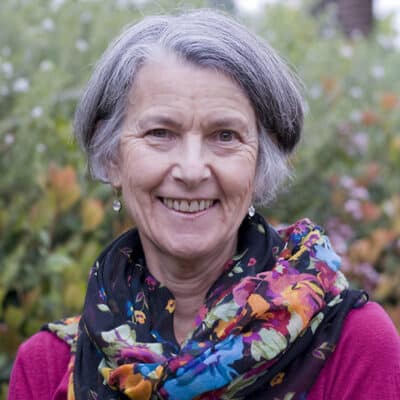 Regina Pally is retired from private practice as a psychiatrist and psychoanalyst and currently engaged in helping the community. She is author of “The Reflective Parent: How to do less and relate more with your kids,” which emphasizes that building and maintaining a strong parent-child relationship is the single most important thing a parent can do for their child. She is Founder of Center for Reflective Communities (CRC), which provides training and educational workshops designed to help parents and other care providers build strong relationships with children by enhancing their capacity to be reflective. She currently is working on a grant to bring Reflective Parenting into the Antelope Valley CA, African American Faith Based Community. Reflective capacity is the uniquely human ability that enables us to make sense of what is going on inside another person and inside ourselves. Regina maintains that being reflective in our relationships with children, leads to greater empathy, understanding, and acceptance and less stress, anger, and aggression, all of which ultimately promotes healthier child development and strengthens families. Additionally she emphasizes that being reflective in ALL our relationships builds more connected and safe communities. Regina has 3 adult children, 7 grandchildren and lives with her husband in Santa Monica.
Lee Slome is a Supervising and Training Analyst and faculty at the Psychoanalytic Institute of Northern California (PINC). She is the Co-director and a Supervisor in PINC’s Community Psychoanalysis Track, an innovative program training analytic candidates in community psychoanalysis. She is a member of APsA’s Department of Psychoanalytic Education’s Psychoanalyst in the Community workgroup, collaborating on various educational and group community psychoanalytic projects. She consults to several community agencies in the Bay Area and practices in Oakland where she works with individuals and couples.
Mark Smaller is an adult, adolescent, and child psychoanalyst, and founding Co-Director of Forward Edge Services with offices Saugatuck/Douglas and Grand Rapids, Michigan. In addition to his private practice he consults to schools and to non and for profit corporations. He is on the Clinical Faculty, Western Michigan University Homer Stryker M.D. School of Medicine, Department of Psychiatry. Dr. Smaller is past president of the American Psychoanalytic Association; former Board member, International Psychoanalytic Association; and Executive Director Emeritus of the Neuropsychoanalysis Foundation in New York. As the former Public Advocacy Department Head of the American Psychoanalytic Association, Dr. Smaller led lobbying efforts in the United States Congress regarding the impact of trauma on children from community violence. Dr. Smaller is Founding Director of the Project Realize Foundation, having created an in-school treatment and research project in Chicago. Project Realize was awarded the 2012 Award for Excellence by the American Association for Child Psychoanalysis, and was featured in the New York Times, January 2010. Currently, Project Realize supports patients and families in west Michigan unable to afford private psychotherapy, and is funded through grants and private donations.
Susanne Walker Wilson has been a therapist, parent educator, early intervention specialist, consultant and trainer in inner-city Washington DC, Colombia, South America, and across Appalachian communities in North Carolina for more than 25 years. She is a licensed clinical social worker and a reflective supervisor with a private practice in Asheville, NC. Her focus is the intersection of early relational health, resilience, and public health prevention. Susanne is endorsed as an Infant Mental Health professional at the Clinical Mentor level and offers reflective consultation through the NC Infant Mental Health Association. Susanne describes Circle of Security as continuing to inform and transform her work and her own heart. She facilitates COSP groups across diverse contexts (rural and urban, with caregivers living near harm and those who experience privilege) and utilizes the Circle as a framework for systems change and leadership development. Through the Psychoanalytic Center of the Carolinas she anchors statewide systems change and collective impact that invites North Carolina leaders and policy makers to hold the centrality of attachment in mind. Through the nonprofit Resources for Resilience, Susanne coordinates an initiative with local government funding to bring COSP groups and ongoing COSP “reunions” (by parent request) to child welfare-involved parents and to the professionals who serve them. She and others have also been bringing COSP groups to North Carolina’s Early Intervention workforce statewide. Susanne is a co-founder and leadership partner of the Attachment Network of North Carolina. As a COSP Fidelity Coach and reflective consultant with professionals around the world, Susanne appreciates the chance to be with and learn from colleagues committed to mentalization models that support increased adult reflective functioning.